

drywall contractors
One of the most noticeable components of an interior space is the drywall, but it takes more than just fastening panels to studs to get a clean, long-lasting finish. Certain projects require meticulous planning, accurate installation, and appropriate finishing, ranging from new walls and ceilings to whole makeovers. Uneven surfaces, recurrent cracks, bad joints, and needless repairs can all be avoided by knowing when to hire experts.
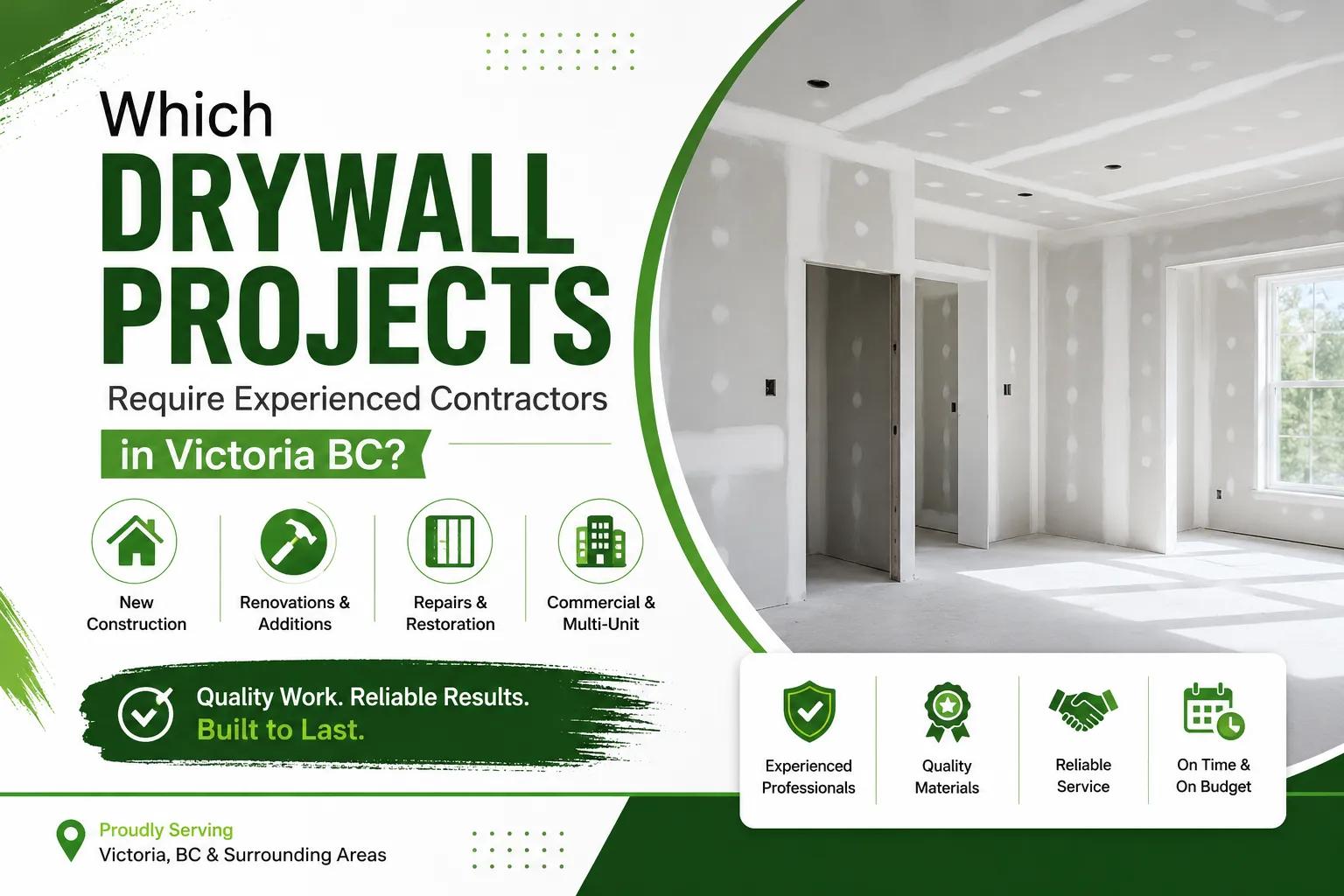
Not every drywall job is the same. Drywall contractors Victoria BC homeowners and businesses choose can handle projects ranging from small renovations to complete wall installations, where framing, insulation, moisture considerations, electrical work, and several stages of finishing may need to be coordinated properly.
When Does a Drywall Project Need an Experienced Contractor?
The size of a project is only one factor. Complexity, wall condition, finish requirements, and coordination with other construction work can all determine whether professional experience is needed.
Here are several drywall projects where experienced contractors can make a meaningful difference.
1. Installing Drywall Throughout a New Home
New construction involves much more than covering walls with drywall panels. The installation has to work with the building's framing, insulation, electrical systems, doors, windows, ceilings, and room layouts.
Panel positioning and fastening need to be planned carefully to reduce unnecessary joints and provide a stable surface. Contractors also need to account for areas such as bathrooms, utility rooms, and other locations where different drywall products or finishing approaches may be appropriate.
A professional installation can also establish a consistent finish throughout the property rather than leaving individual rooms with noticeably different textures or joint lines.
2. Large-Scale Home Renovations
Opening walls during a renovation can reveal issues that were not visible beforehand. Older Victoria homes may contain previous repairs, uneven framing, outdated materials, or areas affected by moisture.
If several rooms are being renovated at once, drywall work needs to be coordinated with other trades. Insulation, plumbing, electrical systems, framing, doors, and flooring may all affect the sequence of work.
This is one situation where expert drywalling contractors can help keep the installation organized. Their role is not simply to install panels but to understand how drywall fits into the wider renovation.
3. Repairing Extensive or Repeated Damage
Minor dents and holes do not always require professional intervention. However, larger areas of damage deserve closer attention.
Professional drywall repair Victoria BC projects may involve:
Large holes caused by impact
Extensive water damage
Soft or swollen drywall
Cracked seams across several areas
Damaged corners
Repeated joint cracking
Sections affected by renovation work
Walls with numerous previous patches
Repeated cracking deserves particular attention. Applying another layer of joint compound may temporarily hide the problem, but it does not address movement, framing issues, moisture, or other causes behind the damage.
4. Basement and Moisture-Affected Areas
Due to their exposure to moisture, basements, bathrooms, kitchens, and utility areas can provide various drywall issues.
Covering drywall with new material might not be the best course of action if it has become stained, bloated, squishy, or degraded. The first thing to look into is the source of the wetness.
While coordinating the drywall work with repairs to the surrounding construction, skilled contractors are able to detect spots that require removal and replacement.
Because of Victoria's coastal climate, property owners must take moisture control into account. Maintaining interior surfaces requires right building techniques, suitable materials, and adequate ventilation.
5. Creating New Interior Walls
Adding a room, dividing a large space, or changing an interior layout often requires more than drywall alone. New walls typically involve framing, insulation where applicable, electrical planning, and drywall installation.
The sequence matters.
Framing needs to be properly aligned before drywall panels are installed. Electrical boxes and other components must be positioned correctly, while insulation should be completed before the wall is closed.
Once the drywall is installed, joints, corners, and fastener locations need to be finished carefully to produce a consistent surface.
6. Commercial and Multi-Unit Projects
Compared to a regular residential room, commercial properties may have more complex requirements. Multiple rooms, larger spaces, specific wall assembly, and rigorous scheduling may be required for offices, retail establishments, rental buildings, and tenant improvement projects.
Coordination with fire-rated assembly, acoustic requirements, mechanical systems, electrical installations, and other building components may also be necessary for commercial drywall construction.
Skilled builders are aware that the installation of drywall must fit within the overall construction timeline. Planning and communication become more crucial because delays at one stage can impact multiple other exchanges.
7. High-Quality Finishing Work
Installing drywall panels is only part of the process. The finished surface can look dramatically different depending on how the joints, corners, fasteners, and transitions are handled.
Poor finishing may result in:
Visible seams
Raised joints
Uneven corners
Nail or screw pops
Surface ridges
Noticeable patches after painting
Lighting can make these imperfections even more obvious. Large windows, recessed lighting, and directional fixtures can highlight uneven surfaces that may not be noticeable under softer lighting.
Experienced contractors pay attention to the preparation and finishing stages rather than treating them as an afterthought.
8. Projects Involving Ceilings
Because the panels are positioned overhead and need to be securely secured and supported, drywall ceilings require extra attention.
When recessed lighting, access panels, HVAC components, odd room geometries, or modifications to ceiling height are involved, ceiling projects can become more complex.
Suspended ceiling systems may be used in place of traditional plasterboard ceilings in certain commercial buildings. Property owners can select the best strategy for their project by being aware of the differences between these systems.
What Should You Discuss Before Work Begins?
Before hiring a contractor, homeowners and property managers should have a clear discussion about the project.
Ask about:
The condition of existing walls
Whether damaged drywall will be removed
Framing and insulation requirements
Type and thickness of drywall
Moisture-prone areas
Expected finish level
Preparation before painting
Coordination with other trades
Cleanup and disposal
It is also useful to clarify whether the quoted scope includes installation, taping, mudding, sanding, and finishing. A clear scope helps prevent confusion later.
DIY or Professional Drywall Work?
DIY repairs can make sense for small holes, minor dents, or straightforward cosmetic work. Larger projects are different.
If several panels need to be installed, walls need to be constructed, ceilings are involved, or existing damage may have an underlying cause, professional assistance can save time and reduce the chance of visible finishing problems.
Homeowners should also consider their available tools, experience, working space, and ability to handle large drywall sheets safely.
Frequently Asked Questions
What are drywall installation services Victoria homeowners commonly need?
Drywall installation services Victoria homeowners may use include installing drywall for new walls, ceilings, room additions, renovations, basement finishing, and replacement of damaged sections. Services can also include taping, joint finishing, sanding, and surface preparation.
How do I find t bar ceiling contractors near me?
When looking for t bar ceiling contractors near me, consider contractors with experience in suspended ceiling systems, commercial interiors, tenant improvements, and ceiling-grid installation. Ask whether they can coordinate ceiling work with lighting, HVAC, electrical, and other building systems.
What is commercial framing and drywall?
Commercial framing and drywall involves constructing interior wall systems and covering them with drywall in commercial buildings. Projects may include offices, retail spaces, multi-unit properties, and tenant improvements. Depending on the building and application, the work may involve steel framing, specialized drywall assemblies, acoustic considerations, and fire-rated systems.
Choosing the Right Approach for Your Project
Experienced drywall work becomes especially valuable when a project involves extensive damage, new walls, ceilings, large renovations, moisture concerns, or commercial construction. The right approach starts with assessing the existing structure and understanding what needs to happen behind the finished surface.
For homeowners and businesses planning drywall or renovation work in Victoria, Hefty Construction LTD provides construction services for residential and commercial projects, with attention to installation, finishing, project coordination, and overall workmanship.